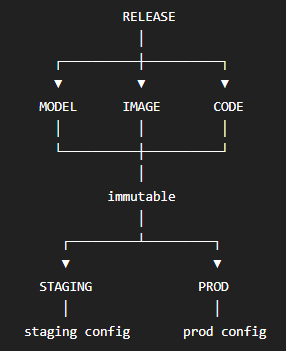
E3 - promotion across environments
- promotion:
- central principle:
roles
- development:
- experimentation
- debugging
- rapid iteration
- integration work
- staging: mock production to test if it will work
- not another training stage
- testing the candidate artifact and serving system
- production: the live system
environment and infrastructure
-
configurations should differ
-
eg: instance count for staging = 1, and production = 5; storage for staging = detector-staging, and production = detector-prod
-
for ease, do not hard-code environment details
-
use common definitions with environment-specific parameters
-
eg:
infra/main.bicepdefine:
	Azure ML workspace
	Storage
	Key Vault
	monitoring resources
	...
- deploy the same infrastructure definition with different parameter sets:
	main.bicep
	├── dev params
	├── staging params
	└── prod params
-
this reduces configuration drift, where the declared and actual state differ
-
manual portal changes are dangerous
-
prefer: change code/config → review → automated deployment over ad-hoc production modification
staging validation
- a model is deployed, need to test:
readiness
     ↓
smoke test
     ↓
schema compatibility
     ↓
integration test
     ↓
latency benchmark
     ↓
security/access checks
-
potentially also model-specific checks on appropriate validation data
-
model evaluation checks if the model predictivity is acceptable, eg: absolute gates
-
smoke test checks if the basics work (valid request gives valid response)
-
integration test checks if the different pieces work together (app + endpoint + model + downstream service)
-
approval gates can be:
- fully automated
- human
- both
-
approval is not rebuilding, but attachment to the elevated artifact/configuration
-
environments can be protected, requiring reviewer approval before deployment
-
environmental identities must be separated for safety and smaller blast radius
-
combine with least privilege
production deployment
- release metadata can contain:
Release 2026.09.17
│
├── model:v29
├── image digest ABC123
├── Git commit 82ab...
├── environment config
├── deployment config
└── pipeline/run provenance
- this helps in proper rollback if needed